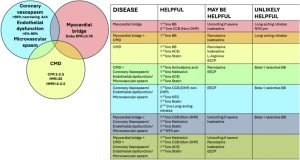
Tag: treatment

Research

Current Evidence-Based Treatment of Angina With Nonobstructive Coronary Arteries (ANOCA)

Although the techniques for coronary function testing (CFT) were largely developed more than 30 years ago, consensus on the specific diagnostic criteria and endotypes is still lacking. Furthermore, the management of patients with angina with nonobstructive coronary arteries (ANOCA) is challenging for most cardiologists. These patients are often a burden to the health care system due to recurrent presentations to the emergency room, repeated coronary angiography, and lack of improvement in their anginal symptoms even after being properly diagnosed with CFT.

Read More »
Research

Advancing the access to cardiovascular diagnosis and treatment among women...

Despite significant progress in cardiovascular pharmacotherapy and interventional strategies, cardiovascular disease (CVD), in particular ischaemic heart disease, remains the leading cause of morbidity and mortality among women in the UK and worldwide. Women are underdiagnosed, undertreated and under-represented in clinical trials directed at management strategies for CVD, making their results less applicable to this subset.

Women have additional sex-specific risk factors that put them at higher risk of future cardiovascular events. Psychosocial risk factors, socioeconomic deprivation and environmental factors have an augmented impact on women’s cardiovascular health, highlighting the need for a holistic approach to care that considers risk factors specifically related to female biology alongside the traditional risk factors.

Read More »
Research

JCS/CVIT/JCC 2023 guideline focused update on diagnosis and treatment of...

In 2008, the Guidelines for diagnosis and treatment of patients with vasospastic angina (coronary spastic angina) were developed by the Japanese Circulation Society, and the revised version was published in 2013. Since then, new findings from various fields such as coronary microvascular dysfunction (CMD), biomarkers, imaging, physiological functions, and genes have accumulated.

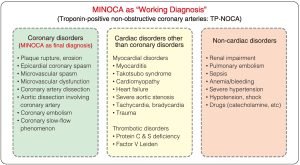
Furthermore, together with the spread of emergency coronary angiography (CAG) for acute coronary syndrome (ACS) and the development of diagnostic techniques using high-sensitive troponin, the new concepts of myocardial infarction with non-obstructive coronary arteries (MINOCA) and ischemia with non-obstructive coronary artery disease (INOCA) have been proposed.

Read More »
Research

Microvascular Angina: Diagnosis, Assessment, and Treatment

In patients with angina symptoms but with no coronary artery disease, as revealed by normal or near-normal coronary angiogram, a potential diagnosis of microvascular angina (MVA) might be considered.

This review examines the evidence on long-term prognosis, state-of-the-art assessment and treatment strategies, and the overwhelming need for standardisation of diagnostic pathways in this patient population. The rising clinical relevance of MVA is explored along with how the absence of obstructive coronary artery disease on coronary angiography may not be a guarantee of benign prognosis in this patient subgroup.

Read More »
Around The World

Real Patient Stories

Barbara’s story

I am a 62-year-old retired physician. My story began at age 47.

I was a very busy practicing OB/Gyn physician who was otherwise healthy.

I was on call at the hospital, and it was turning out to be one of the busiest days I had ever experienced as a physician. I was in a medical group that took call for 24 hours straight, most of the time working the entire 24 hours.

Halfway through that 24-hour call, I was in the operating room doing a C/Section on a patient. Halfway through the surgery I began to feel crushing chest pain.

Read More »

Don’s story

I consider myself one of the lucky ones.

I was a runner, triathlete, skier, scuba diver, etc. before my problems got severe enough to seek medical help.

Most doctors took my health decline seriously from the start.

Later, it was not uncommon for doctors who were unaware of my athletic endeavours to assume my subsequent lack of fitness was the cause of my condition rather than the result.

Read More »

Arthur’s story

My name is Arthur. I am a Scot but have lived in London for nearly forty years.

In 2014, I had my first heart attack. In the following six years, I went to A&E at least twice a year. Every time, I was sent home and was told it was reflux.

My own doctor in about 2015/16 put me on half an angina pill. When I was in hospital, I was told by the cardiology doctors that I did not need it as I never had angina at all.

Read More »

Get Informed

Learn all about the symptoms, causes and triggers of these heart conditions.

Educate. Inform. Enlighten.