Tag: myocardial bridge

Research

Evaluating Ischemic Heart Disease in Women: Focus on Angina With...

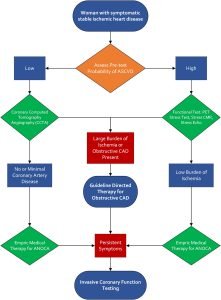
Ischemic heart disease (IHD) is common in women, and cardiovascular disease is a leading cause of morbidity and mortality. While obstructive coronary artery disease is the most common form of IHD, millions of women suffer from angina with nonobstructive coronary arteries (ANOCA), an umbrella term encompassing multiple nonatherosclerotic disorders of the coronary tree.

The underlying pathology leading to ischemia in these syndromes may be challenging to diagnose, leaving many women without a diagnosis despite persistent symptoms that impact quality of life and adversely affect long-term cardiovascular prognosis. In the last decade, there have been significant advances in the recognition and diagnostic evaluation of ANOCA.


Read More »
Around The World

Real Patient Stories

Sandra’s story

My story began in January 2010, while sitting at a traffic light returning to the office. I was working as a home health physical therapist. I began having chest pain out of nowhere. I got to my office and my boss, an RN, asked me if I was OK. I told her about the chest pain. By then it was starting to progress down my left arm. She took my blood pressure, normally 98/68. It was 140/90. She called my husband and told him to meet me at the ER. I drove myself there. They ran the normal tests and diagnosed me with costochondritis. Pain meds made the symptoms go away. The pain came back six times in the next 6 months. I asked for a cardiologist referral, but was denied, due to my age (39), lack of family history, and being in shape.

Read More »

Rene’s story

I had my first heart attack in 2018. I was 67 years old.

After numerous trips to the hospital, tests, and frequent heart attack-like symptoms, I was diagnosed with Prinzmetal Angina and placed on medications.

I lost weight. I exercised. I was finally feeling better. I even got back to my painting.

Until…2019 happened.

Read More »

Don’s story

I consider myself one of the lucky ones.

I was a runner, triathlete, skier, scuba diver, etc. before my problems got severe enough to seek medical help.

Most doctors took my health decline seriously from the start.

Later, it was not uncommon for doctors who were unaware of my athletic endeavours to assume my subsequent lack of fitness was the cause of my condition rather than the result.

Read More »

Get Informed

Learn all about the symptoms, causes and triggers of these heart conditions.

Educate. Inform. Enlighten.