Tag: index of microcirculatory resistance

Research

The invasive investigation of INOCA in the coronary catheterization lab

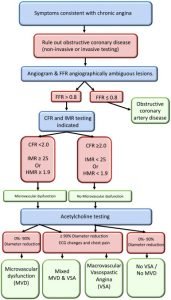
Over half of all patients with angina have no angiographically demonstratable obstructive coronary disease, with a significant proportion of these patients having undiagnosed microvascular dysfunction and/or vasospastic angina. In chronic coronary syndrome, ischemia with non-obstructive coronary artery disease (INOCA) often remains undiagnosed, or uninvestigated. INOCAmay occur due to vasospastic angina and microvascular dysfunction and require invasive assessment in the coronary catheterization lab. To evaluate INOCA coronary flow reserve (CFR) and the index of microcirculatory resistance (IMR) are used to assess microvascular dysfunction before acetylcholine provocation testing for coronary spasm. This review provides an overview of the invasive investigation of INOCA in the coronary catheterization lab for patients with angina to be optimally managed.


Read More »
Around The World

Real Patient Stories

Lynn’s story

I had my first spasm when I was just a young child and continued for almost 50 years with no diagnosis. I always assumed everybody had flushing feelings throughout their body, and hot flashes accompanied by chest pain.

It wasn’t until I was walking my dogs with my sister, one day, and we were going up a steep incline and I couldn’t keep up. I asked her if she felt chest pains when she walked up hills. She looked at me like I was crazy and told me: No!

I then realized something might be wrong with me.

Read More »

Arthur’s story

My name is Arthur. I am a Scot but have lived in London for nearly forty years.

In 2014, I had my first heart attack. In the following six years, I went to A&E at least twice a year. Every time, I was sent home and was told it was reflux.

My own doctor in about 2015/16 put me on half an angina pill. When I was in hospital, I was told by the cardiology doctors that I did not need it as I never had angina at all.

Read More »

Suzanne’s story

In February 2020, I had a VF cardiac arrest.

My memories start a week after the event when I awoke in ICU.

I was confused and initially unable to move. My family were at my bedside and told me what had happened.

Amazingly, I had survived not only the arrest, but also aspiration pneumonia, sepsis and a stage 3 acute kidney injury requiring dialysis.

Read More »

Get Informed

Learn all about the symptoms, causes and triggers of these heart conditions.

Educate. Inform. Enlighten.