Tag: coronary flow reserve

Research

The invasive investigation of INOCA in the coronary catheterization lab

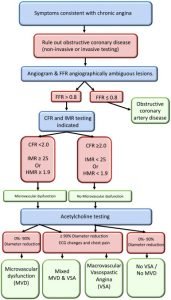
Over half of all patients with angina have no angiographically demonstratable obstructive coronary disease, with a significant proportion of these patients having undiagnosed microvascular dysfunction and/or vasospastic angina. In chronic coronary syndrome, ischemia with non-obstructive coronary artery disease (INOCA) often remains undiagnosed, or uninvestigated. INOCAmay occur due to vasospastic angina and microvascular dysfunction and require invasive assessment in the coronary catheterization lab. To evaluate INOCA coronary flow reserve (CFR) and the index of microcirculatory resistance (IMR) are used to assess microvascular dysfunction before acetylcholine provocation testing for coronary spasm. This review provides an overview of the invasive investigation of INOCA in the coronary catheterization lab for patients with angina to be optimally managed.
Read More »
Research

Rethinking False Positive Exercise Electrocardiographic Stress Tests by Assessing Coronary...

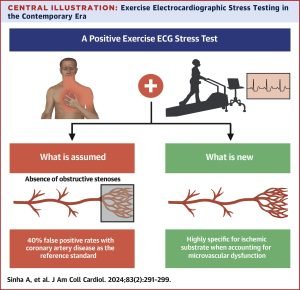
Exercise electrocardiographic stress testing (EST) has historically been validated against the demonstration of obstructive coronary artery disease. However, myocardial ischemia can occur because of coronary microvascular dysfunction (CMD) in the absence of obstructive coronary artery disease.

The aim of this study was to assess the specificity of EST to detect an ischemic substrate against the reference standard of coronary endothelium-independent and endothelium-dependent microvascular function in patients with angina with nonobstructive coronary arteries (ANOCA).

Read More »
Research

Clinical Relevance of Ischemia with Nonobstructive Coronary Arteries According to...

In the absence of obstructive coronary stenoses, abnormality of noninvasive stress tests (NIT) in patients with chronic coronary syndromes may indicate myocardial ischemia of nonobstructive coronary arteries (INOCA). The differential prognosis of INOCA according to the presence of coronary microvascular dysfunction (CMD) and incremental prognostic value of CMD with intracoronary physiologic assessment on top of NIT information remains unknown.

In stable patients with nonobstructive coronary stenoses, a diagnosis of INOCA based only on abnormal NIT did not identify patients with higher risk of long‐term cardiovascular events. Incorporating intracoronary physiologic assessment to NIT information in patients with nonobstructive disease allowed identification of patient subgroups with up to 4‐fold difference in long‐term cardiovascular events.

Read More »
Research

Untangling the pathophysiologic link between coronary microvascular dysfunction and heart...

Coronary microvascular disease (CMD), characterized by impaired coronary flow reserve (CFR), is a common finding in patients with stable angina. Impaired CFR, in the absence of obstructive coronary artery disease, is also present in up to 75% of patients with heart failure with preserved ejection fraction (HFpEF).

Heart failure with preserved ejection fraction is a heterogeneous syndrome comprising distinct endotypes and it has been hypothesized that CMD lies at the centre of the pathogenesis of one such entity: the CMD–HFpEF endotype. This article provides a contemporary review of the pathophysiology underlying CMD, with a focus on the mechanistic link between CMD and HFpEF.

Read More »
Research

Coronary microvascular disease: current concepts of pathophysiology, diagnosis and management

Coronary microvascular disease (CMD) is present in 30% of patients with angina and is associated with increased morbidity and mortality. We now have an improved understanding of the pathophysiology of CMD and the invasive and noninvasive tests that can be used to make the diagnosis.

Recent studies have shown that management of CMD guided by physiological testing yields better results than empirical treatment. Despite major advances in diagnosing and stratifying this condition, therapeutic strategies remain limited and poorly defined.

Read More »
Around The World

Real Patient Stories

Barbara’s story

I am a 62-year-old retired physician. My story began at age 47.

I was a very busy practicing OB/Gyn physician who was otherwise healthy.

I was on call at the hospital, and it was turning out to be one of the busiest days I had ever experienced as a physician. I was in a medical group that took call for 24 hours straight, most of the time working the entire 24 hours.

Halfway through that 24-hour call, I was in the operating room doing a C/Section on a patient. Halfway through the surgery I began to feel crushing chest pain.

Read More »

Sinéad’s story

My first episode caught me completely off guard on a Sunday morning in 2014. I was an active, healthy 35-year-old mother of 3. It felt like what I imagined having a heart attack would feel like. After a minute or two it stopped as suddenly as it had started and I got out of bed to start my day, I had experienced palpitations before and brushed it off as a once off.

I had about 8 more episodes before lunch time and made a deal with myself that if it continued, I would call an ambulance. I was a busy mum and didn’t want to be ‘dramatic’! It resolved by 2 p.m.

Read More »

Suzanne’s story

In February 2020, I had a VF cardiac arrest.

My memories start a week after the event when I awoke in ICU.

I was confused and initially unable to move. My family were at my bedside and told me what had happened.

Amazingly, I had survived not only the arrest, but also aspiration pneumonia, sepsis and a stage 3 acute kidney injury requiring dialysis.

Read More »

Get Informed

Learn all about the symptoms, causes and triggers of these heart conditions.

Educate. Inform. Enlighten.