Latest News

What's New

Recent Articles

Research

Sex-specific and ethnicity-specific differences in MINOCA

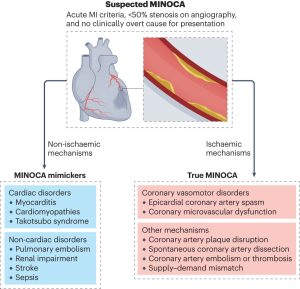
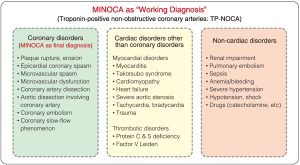
Suspected myocardial infarction with non-obstructive coronary arteries (MINOCA) has received increasing attention over the past decade. Given the heterogeneity in the mechanisms underlying acute myocardial infarction in the absence of obstructive coronary arteries, the syndrome of MINOCA is considered a working diagnosis that requires further investigation after diagnostic angiography studies have been performed, including coronary magnetic resonance angiography and functional angiography.

Although once considered an infrequent and low-risk form of myocardial infarction, recent data have shown that the prognosis of MINOCA is not as benign as previously assumed. However, despite increasing awareness of the condition, many questions remain regarding the diagnosis, risk stratification and treatment of MINOCA.
Read More »
Research

JCS/CVIT/JCC 2023 guideline focused update on diagnosis and treatment of...

In 2008, the Guidelines for diagnosis and treatment of patients with vasospastic angina (coronary spastic angina) were developed by the Japanese Circulation Society, and the revised version was published in 2013. Since then, new findings from various fields such as coronary microvascular dysfunction (CMD), biomarkers, imaging, physiological functions, and genes have accumulated.

Furthermore, together with the spread of emergency coronary angiography (CAG) for acute coronary syndrome (ACS) and the development of diagnostic techniques using high-sensitive troponin, the new concepts of myocardial infarction with non-obstructive coronary arteries (MINOCA) and ischemia with non-obstructive coronary artery disease (INOCA) have been proposed.

Read More »
Research

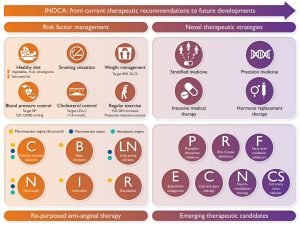
Novel therapy for ischaemia with no obstructive coronary arteries

Coronary vascular dysfunction causes microvascular angina and vasospastic angina, which are prevalent clinical endotypes of myocardial ischaemia with no obstructive coronary arteries (INOCA). INOCA impairs quality of life and confers an increased likelihood of cardiovascular events and health resource utilization.

Contemporary advances in non-invasive and invasive testing facilitate an accurate diagnosis and linked therapy. New guideline recommendations and patient advocacy are also relevant. Nonetheless, a lack of disease-modifying therapy for INOCA perpetuates the medical need.

Read More »
Research

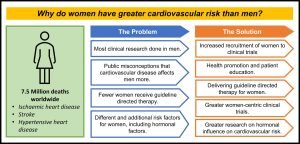
Raising awareness about cardiovascular disease in women

Each year, cardiovascular disease maintains its status as the leading cause of morbidity and mortality in women. In their most recent published statistics, the World Health Organization showed that ischaemic heart disease, stroke, and hypertension resulted in over 7.5 million deaths in women globally in 2019.

This trend is similar to the mortality burden in men and is echoed by countries worldwide. Despite this, there remains a significant male predominance in practically all clinical trials measuring the safety and efficacy of investigations and management of cardiovascular disease, which ultimately directs clinical guidelines.

Read More »
Research

Management of vasospastic angina

Vasospastic angina is a well-established cause of chest pain that is caused by coronary artery spasm. It can be clinically diagnosed during a spontaneous episode by documenting nitrate-responsive rest angina with associated transient ischaemic ECG changes but more often requires provocative coronary spasm testing with acetylcholine during coronary angiography.

Vasospastic angina may result in recurrent episodes of angina (including nocturnal angina), which can progress on to major adverse cardiac events. Calcium channel blockers are first-line therapy for this condition, given their anti-anginal and cardioprotective benefits.

Read More »
Research

Migraine and cardiovascular disease: what cardiologists should know

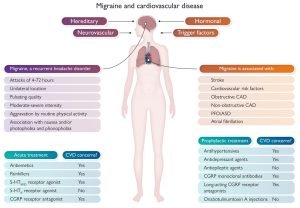
Migraine is a chronic neurovascular disease with a complex, not fully understood pathophysiology with multiple causes. People with migraine suffer from recurrent moderate to severe headache attacks varying from 4 to 72 h. The prevalence of migraine is two to three times higher in women compared with men.

Importantly, it is the most disabling disease in women over 50 years of age due to a high number of years lived with disability, resulting in a very high global socioeconomic burden. Robust evidence exists on the association between migraine with aura and increased incidence of cardiovascular disease (CVD), in particular ischaemic stroke. People with migraine with aura have an increased risk of atrial fibrillation, myocardial infarction, and cardiovascular death compared with those without migraine.

Read More »
Research

Functional coronary angiography for the assessment of the epicardial vessels...

Over the last decade, steady progress has been made in the ability to assess coronary stenosis relevance by merging computerised analyses of angiograms with fluid dynamic modelling.

The new field of functional coronary angiography (FCA) has attracted the attention of both clinical and interventional cardiologists as it anticipates a new era of facilitated physiological assessment of coronary artery disease, without the need for intracoronary instrumentation or vasodilator drug administration, and an increased adoption of ischaemia-driven revascularisation.

Read More »
Research

Coronary Microvascular Spasm: Clinical Presentation and Diagnosis

Professor Maseri pioneered the research and treatment of coronary vasomotion abnormalities represented by coronary vasospasm and coronary microvascular dysfunction (CMD).

These mechanisms can cause myocardial ischaemia even in the absence of obstructive coronary artery disease, and have been appreciated as an important aetiology and therapeutic target with major clinical implications in patients with ischaemia with non-obstructive coronary artery disease (INOCA). Coronary microvascular spasm is one of the key mechanisms responsible for myocardial ischaemia in patients with INOCA.

Read More »
Research

Design and rationale of the NetherLands registry of invasive Coronary...

Angina without angiographic evidence of obstructive coronary artery disease (ANOCA) is a highly prevalent condition with insufficient pathophysiological knowledge and lack of evidence-based medical therapies. This affects ANOCA patients prognosis, their healthcare utilization and quality of life.

In current guidelines, performing a coronary function test (CFT) is recommended to identify a specific vasomotor dysfunction endotype. The NetherLands registry of invasive Coronary vasomotor Function testing (NL-CFT) has been designed to collect data on ANOCA patients undergoing CFT in the Netherlands.

Read More »
Research

ANOCA/INOCA/MINOCA: Open artery ischemia

Ischemic heart disease continues to represent a major health threat for death, disability, and poor quality of life as it also consumes enormous health-related resources. For over a century, the major clinical phenotype was taken to be obstructive atherosclerosis involving the larger coronary arteries (e.g., coronary artery disease [CAD]). However, evolving evidence now indicates that nonobstructive CAD is the predominant phenotype.

Patients within this phenotype have been termed to have angina with no obstructive CAD (ANOCA), ischemia with no obstructive CAD (INOCA), or myocardial infarction with no obstructive coronary arteries (MINOCA). But as methods to assess cardiomyocyte injury evolve, these phenotypic distinctions have begun to merge, raising concern about their usefulness.

Read More »
Around The World

Real Patient Stories

Charlotte’s story

While at work in September 2014, I lost vision of my left eye and had terrible feeling of “heat” all over the left side of my body.

The ER ophthalmologist directed me to cardiology for a vascular problem.

A week later, I could not walk 100 meters (325 feet) without crushing chest pain and shortness of breath.

I was no longer functional. Making my bed was all I could do in a whole day. I was no longer an active 54-year-old.

Read More »

Sinéad’s story

My first episode caught me completely off guard on a Sunday morning in 2014. I was an active, healthy 35-year-old mother of 3. It felt like what I imagined having a heart attack would feel like. After a minute or two it stopped as suddenly as it had started and I got out of bed to start my day, I had experienced palpitations before and brushed it off as a once off.

I had about 8 more episodes before lunch time and made a deal with myself that if it continued, I would call an ambulance. I was a busy mum and didn’t want to be ‘dramatic’! It resolved by 2 p.m.

Read More »

Sandra’s story

My story began in January 2010, while sitting at a traffic light returning to the office. I was working as a home health physical therapist. I began having chest pain out of nowhere. I got to my office and my boss, an RN, asked me if I was OK. I told her about the chest pain. By then it was starting to progress down my left arm. She took my blood pressure, normally 98/68. It was 140/90. She called my husband and told him to meet me at the ER. I drove myself there. They ran the normal tests and diagnosed me with costochondritis. Pain meds made the symptoms go away. The pain came back six times in the next 6 months. I asked for a cardiologist referral, but was denied, due to my age (39), lack of family history, and being in shape.

Read More »

Get Informed

Learn all about the symptoms, causes and triggers of these heart conditions.

Educate. Inform. Enlighten.